Project Overview
Designed a lightweight truss bridge in SolidWorks and validated its structural integrity through Finite Element Analysis in ANSYS Mechanical. The bridge was fabricated from balsa wood and physically tested under incremental loading — sustaining a maximum load of 77 kg before structural failure. The project was completed independently during my undergraduate studies as a self-directed engineering challenge.
Challenge
The primary challenge was designing a bridge geometry that maximised load-bearing capacity while minimising material mass — balsa wood has exceptional strength-to-weight ratio but is brittle under concentrated stress. Predicting failure points accurately before physical fabrication required a reliable FEA setup with correct boundary conditions, mesh density, and material property definitions. The design also needed to be manufacturable by hand using basic cutting and bonding tools.
Solution
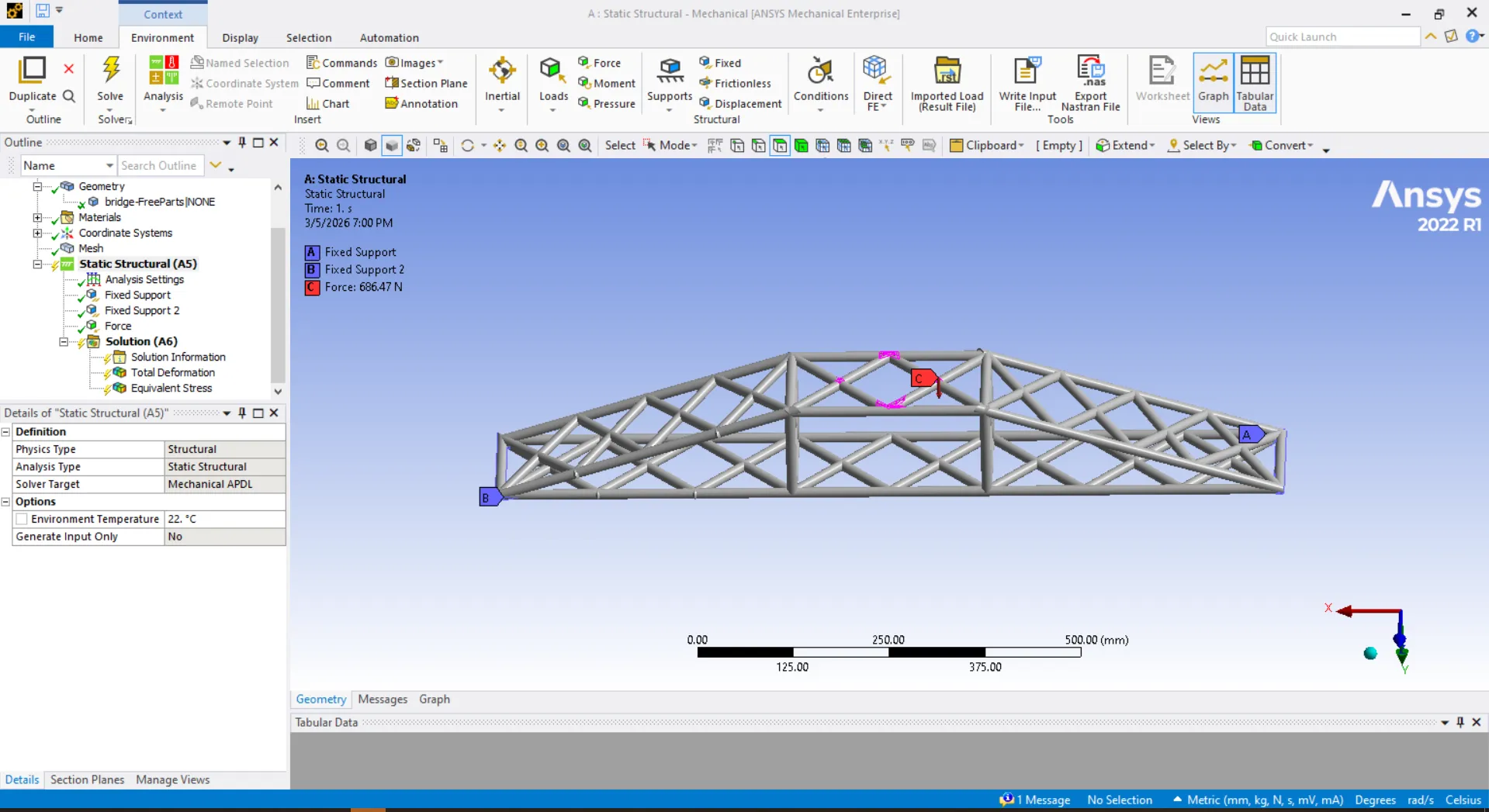
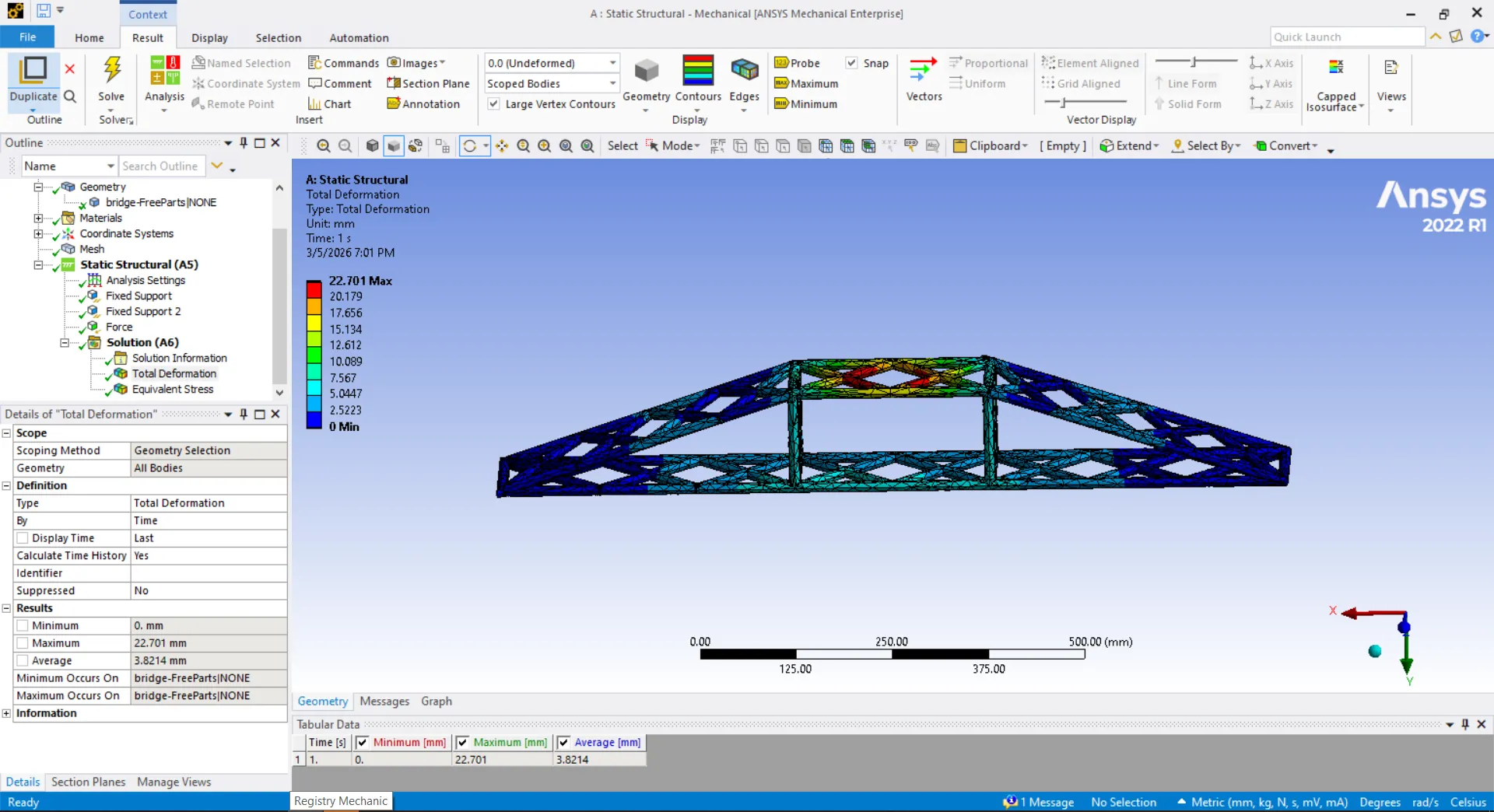
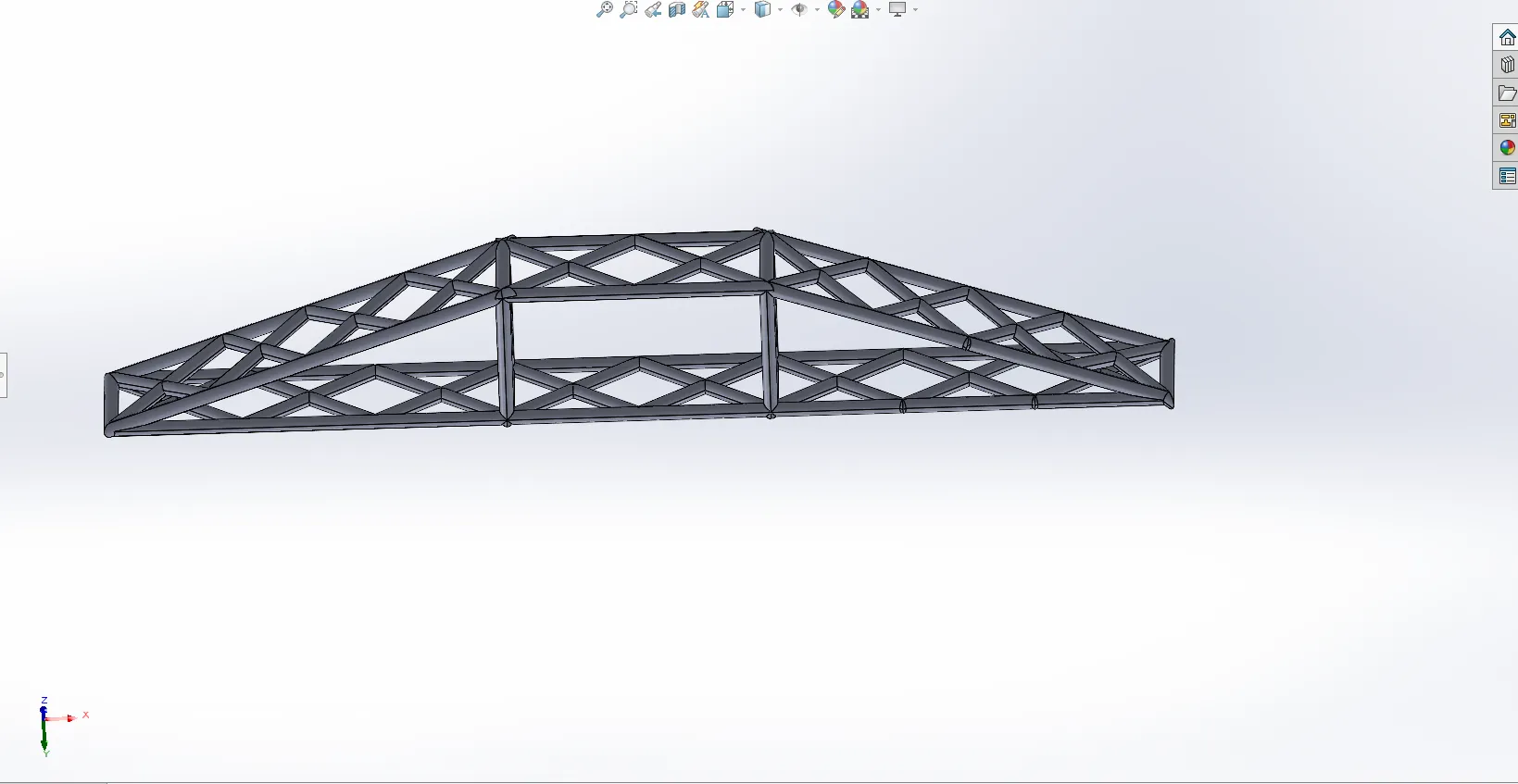
Modelled a lattice truss geometry in SolidWorks, optimising the diamond-pattern cross-bracing for even load distribution across the full span. Imported the model into ANSYS Mechanical and configured a static structural analysis with fixed supports at both ends and a concentrated force of 686.47 N applied at the mid-span top chord. Material properties were set to match balsa wood — elastic modulus 3.4 GPa, density 160 kg/m³. The simulation produced a maximum total deformation of 22.701 mm under the applied load, identifying the top-chord mid-span junction as the critical failure zone. The physical bridge was then fabricated and tested, confirming the predicted failure location and sustaining 77 kg before collapse.